Preserving Novelty Through Repetition
November 2025 ...
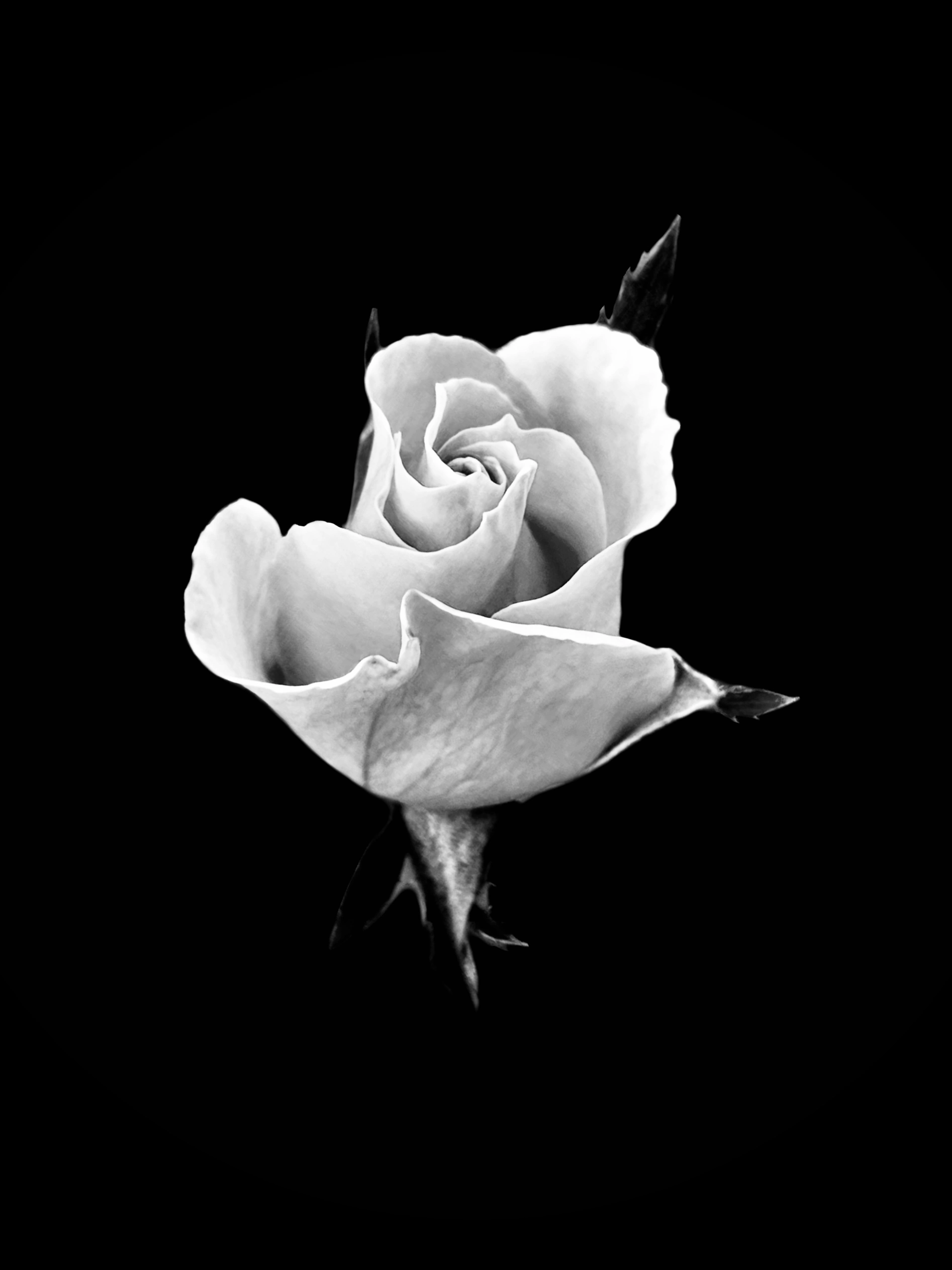
I had no Wi-Fi today and was bored on the bus home, so I decided to edit a photo. I finished in five minutes and wondered, could that be considered art? Art is defined as the expression of human creative skill and imagination, typically in a visual form—here, photo editing—producing works to be appreciated primarily for their beauty or emotional power. And yet, this was done with almost no effort, following the same process I use every time: Open Ibis Paint X. Remove background. Decrease saturation. Increase contrast. Set background to black. Done, repeat for the next photo.
So I guess I can say I’m doing this more to extract a form of beauty than to express emotional power. I could craft a story about illuminating purity and hope in darkness—The rose blooms not because darkness allows it to show more easily, but in spite of it. How deep and spirited.
But in reality, what I feel most is the process. And because I repeat this process so many times, instead of becoming numb to it, I notice subtleties. How blurring one petal shifts the entire mood. How removing slightly more background changes the balance. How contrast can turn soft petals into quiet sharpness. Repetition sharpens attention, not dulls it. It frees space in my mind—not to “try harder,” but to see better.

Maybe creativity isn’t one big burst of emotion or genius. Maybe it’s repetition that becomes fluency, fluency that reveals nuance, and nuance that creates meaning. Novelty and routine aren’t opposites—they’re collaborators.
In the end, art might not be defined by the time spent or the complexity of the method, but by the quiet consistency of noticing: noticing beauty, noticing difference, noticing what stays and what shifts. And perhaps if a five-minute black-and-white rose can make someone pause—even just for a moment—then ye, maybe that is art.